
Cryptocurrency is a digital asset, while blockchain is a record-keeping technology that some cryptocurrencies use. That is the core of what’s the difference between crypto and blockchain: one is an asset, and the other is a system for recording information.
Crypto vs. blockchain: the key differences at a glance
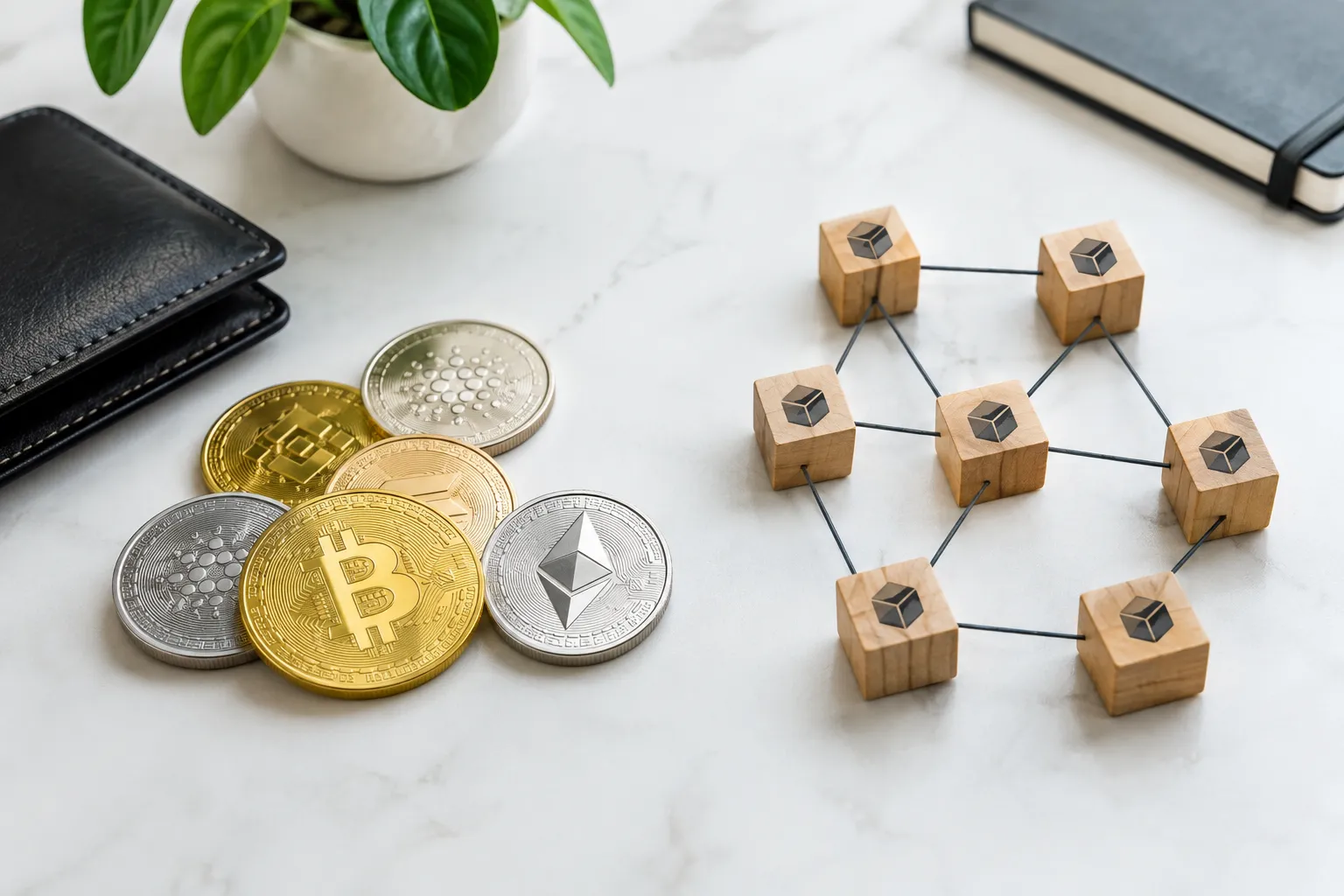
Cryptocurrency is a digital asset; blockchain is a type of shared digital record. A cryptocurrency may use a blockchain to record transactions, but blockchain technology and cryptocurrency are not interchangeable terms.
| Qualitative criterion | Cryptocurrency | Blockchain |
|---|---|---|
| What it is | A digital asset | A type of record-keeping technology |
| What it does | Can be transferred or used within a digital system | Records information according to a network’s rules |
| How they relate | May use a blockchain to record transactions | Can support cryptocurrency transactions and other applications |
| What to examine | The asset, its network, and how it is used | How the system records and validates information |
For example, Bitcoin is a cryptocurrency, and its transactions are recorded on the Bitcoin blockchain. The currency and the record-keeping system are connected, but they are not the same thing.
If you want a broader introduction to the technology, start with our guide to blockchain technology basics. It explains the underlying idea before you compare particular digital assets or networks.
What cryptocurrency and blockchain each do

Cryptocurrency is a digital asset that can be transferred electronically; blockchain is a record-keeping system that can track transactions and other information. Blockchain is not itself money, even when it records cryptocurrency activity.
A cryptocurrency is an asset represented digitally. Depending on its design and network, it may be used to transfer value or interact with applications. Bitcoin and Ether are examples of cryptocurrencies associated with their own networks. Their functions and network rules differ, so the word “crypto” does not describe one single asset or system.
A blockchain is a ledger: a record organized into blocks and maintained according to rules for the network. In a public blockchain, participants can use network software to see and process activity. The precise way a network accepts and records updates depends on its design.
A simple analogy is a shared record book. Cryptocurrency is something that may be represented in the entries; blockchain is a way of maintaining and updating those entries. The analogy has limits: blockchains rely on digital signatures and network rules, not just people writing in a book.
This distinction helps answer common questions:
- “Is blockchain money?” No. Blockchain is technology for recording information, not a currency.
- “Is crypto the same as blockchain?” No. Crypto refers to digital assets; blockchain refers to a kind of system that may record activity involving those assets.
- “Can a cryptocurrency exist without using a blockchain?” Digital assets can be organized in different ways; the word cryptocurrency alone does not tell you the specific record-keeping design. Check which network an asset uses and how that network processes transactions.
When learning about Bitcoin or Ethereum, keep the asset, the network, and the wallet separate in your mind. A wallet is a tool for managing access to assets and interacting with a network; it is not the blockchain itself. Ethereum’s documentation also distinguishes accounts from wallets and explains how keys relate to accounts.
How blockchain records crypto transactions
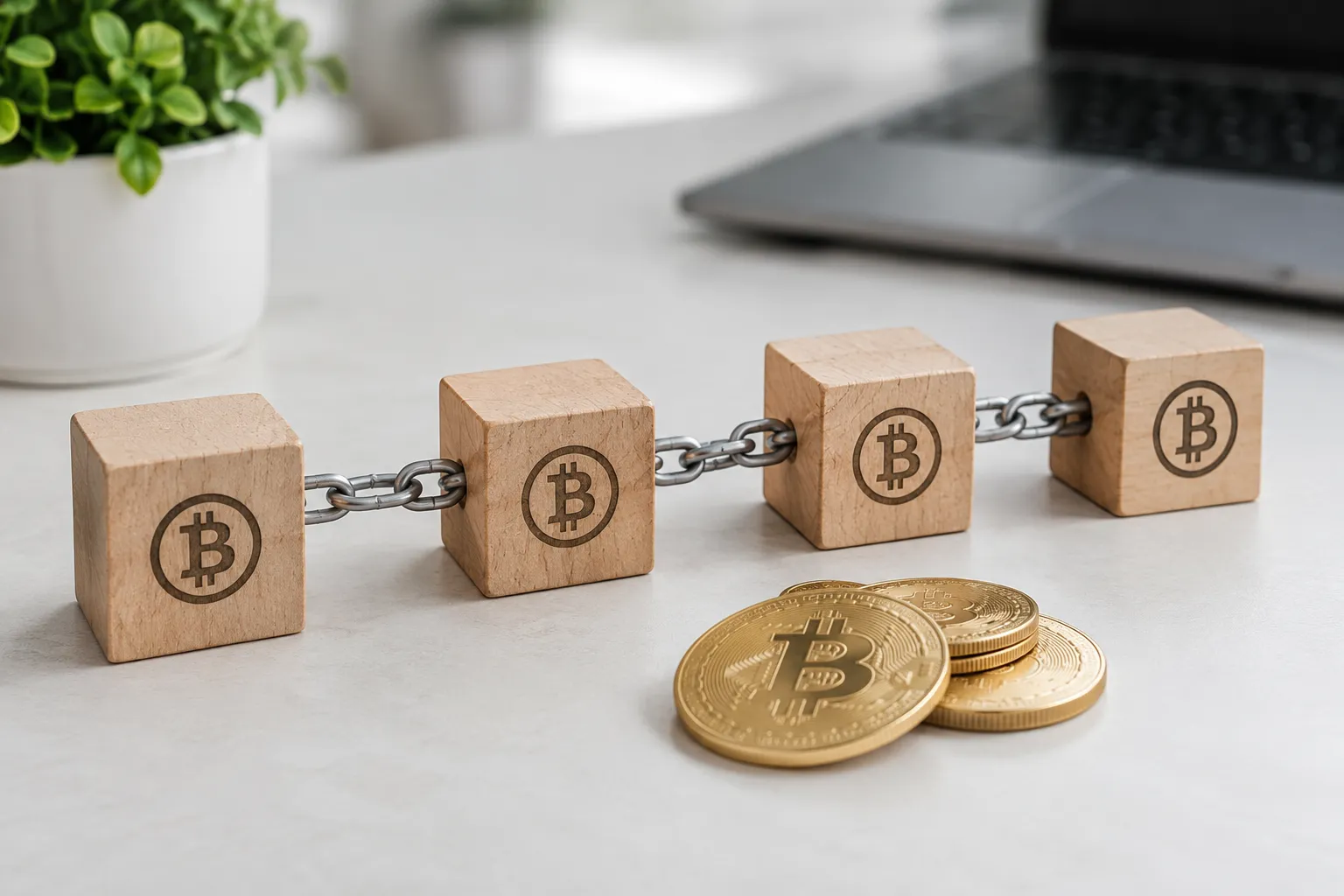
A blockchain records crypto transactions by applying network rules to proposed transfers and adding accepted activity to its ledger. Bitcoin illustrates the relationship: it is the cryptocurrency, while the Bitcoin blockchain records transactions involving it.
At a high level, a transaction begins when someone uses a wallet to request an action, such as sending cryptocurrency to another address. The request is digitally signed using key information associated with the sender. Network participants then process it according to the blockchain’s rules. If accepted, the transaction is recorded in the ledger.
That sequence does not mean a wallet physically contains coins. A wallet helps manage the information needed to access and use digital assets associated with network records. Losing control of the relevant keys can create serious access problems, so wallet security is a separate issue from how the blockchain records transactions.
In Bitcoin, transactions use inputs and outputs to describe how value is spent and where it is directed. The network’s transaction records and rules determine whether a proposed transaction can be accepted. For a technical explanation, see the Bitcoin transaction reference.
Ethereum transactions follow the rules of the Ethereum network and can interact with accounts and applications, not only transfer Ether. The specific action depends on the transaction and the application involved. For example, a transaction may interact with a smart contract, which is software that runs according to programmed conditions on the network. Ethereum’s transaction documentation describes how transactions are initiated, signed, and processed.
The details vary across networks, so do not assume that a Bitcoin transaction works exactly like an Ethereum transaction or that every asset follows the same technical design. Before making a transfer, identify the asset and its network, confirm the receiving address and network match, and read the wallet or service’s instructions. Sending assets using the wrong network or address may make recovery difficult or impossible.
Where blockchain is used beyond cryptocurrency

Blockchain can be used to record information beyond cryptocurrency transactions, because its core role is maintaining a ledger rather than creating money. The usefulness of a particular application depends on its purpose and implementation.
One example is decentralized finance, or DeFi: financial applications that use blockchain networks and smart contracts to carry out activities such as token trading, lending, borrowing, or automated payments. A smart contract is software that executes according to rules written into it. Ethereum’s DeFi overview describes these types of services and the role smart contracts can play.
Blockchain-based token systems provide another connection between record-keeping and digital assets. On Ethereum, for example, the ERC-20 standard defines a common interface and basic functions for certain tokens. The standard helps explain how tokens can follow shared rules on a network; it does not by itself establish what a token is worth or whether it is useful.
The broader lesson is that a blockchain can be used to record different kinds of activity, while cryptocurrencies are only one category of asset associated with blockchain networks. A project’s use of blockchain does not prove that its design is useful, that its claims are sound, or that an associated token has value. Evaluate the application and the asset separately.
What the differences mean for your next step
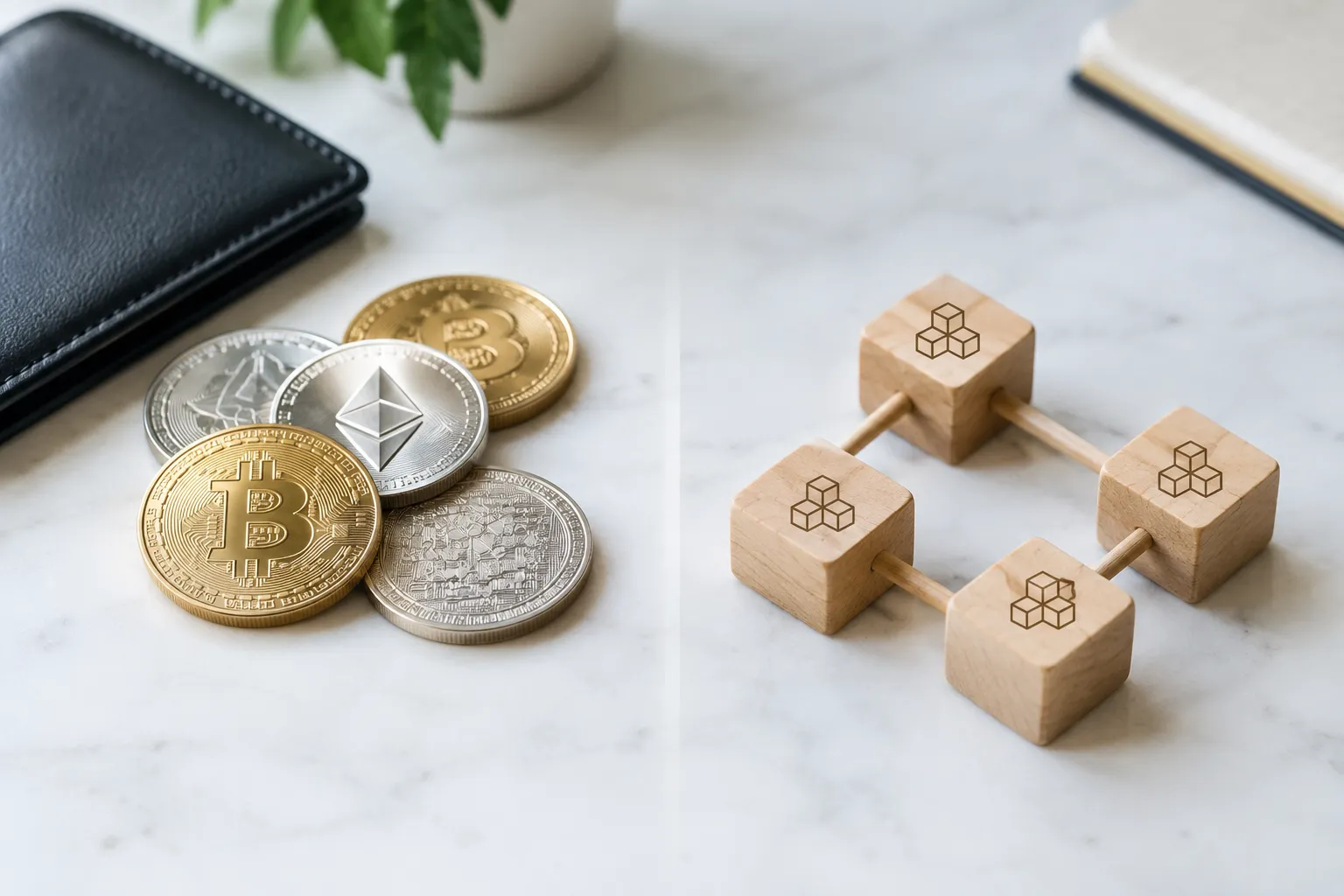
The distinction helps you ask two separate questions: what does the digital asset do, and how does its network record activity? Neither answer alone establishes that an asset is valuable or that using a network is free of risk.
When comparing Bitcoin and Ethereum, for example, do not treat “uses blockchain” as a complete description. Consider which network the asset belongs to, what actions that network supports, and what you would need to do to use it. Network activity may involve fees or technical steps, and the details depend on the network and service.
There are also risks that blockchain terminology can obscure. A record-keeping system does not prevent every scam, phishing attempt, software flaw, or user mistake. The Federal Trade Commission explains that cryptocurrency payments are generally difficult to reverse and describes common cryptocurrency scams in its consumer guidance. Before sending funds, independently verify the recipient and be cautious of requests that pressure you to act quickly.
What blockchain can and cannot tell you about crypto
A blockchain can show how activity is recorded under a network’s rules, but it cannot establish that a cryptocurrency is valuable, appropriate for you, or free from risk. You do not withdraw money from blockchain technology itself; you use an asset or service connected to a network.
A blockchain’s record may help users follow transactions, but a record is not the same as a guarantee about the people, applications, or assets involved. A token can be recorded on a blockchain without that fact proving demand, a reliable use case, or future value. Consider the asset and its use independently from the technology that records it.
Likewise, “money on the blockchain” is shorthand. A blockchain records activity involving digital assets; it is not a bank account from which you withdraw cash. Converting a digital asset into dollars, if available, requires a service or transaction that supports that exchange. The process, costs, eligibility, and risks depend on the service and the asset. Check the service’s terms and applicable requirements before relying on a conversion.
Blockchain technology is not completely safe. A network can have technical risks, and a user can encounter phishing or lose access to wallet credentials. The CFTC’s advisory on virtual currency trading discusses risks including volatility, hacking, and phishing. For a personal financial, tax, or legal decision, consult a qualified professional who can consider your circumstances.
Recommended next steps
To choose what to learn next, start with the question you want answered: how a network works, how a particular cryptocurrency works, or how to handle a wallet. Then verify the asset and network before taking any action.
- Identify whether your immediate goal is to understand blockchain records or learn about a specific digital asset.
- Choose Bitcoin or Ethereum as a focused example, and read about its asset, network, and transaction process separately.
- Check the network named by the wallet or service before sending or receiving an asset, and verify the address and network using that service’s instructions.
- Review the risks of the asset, network, and any service you plan to use; do not treat blockchain use as proof of value or protection.
- If your next question is about how these components fit together, read how crypto and blockchain connect before deciding whether to explore a wallet or an application.