


Crypto is a broad term for digital assets and the systems used to create, transfer, and manage them. Bitcoin is one example, not another word for crypto as a whole. In brief:
- A blockchain is a shared digital record that networks use to track transactions.
- Coins and tokens are different types of crypto assets.
- Exchanges can help people buy or sell crypto; wallets help them manage access to it.
- Crypto values and transaction rules vary, and participating is not necessary or guaranteed to be profitable.
Understanding these parts makes it easier to follow discussions about crypto without treating every asset or platform as the same.
What crypto means beyond Bitcoin
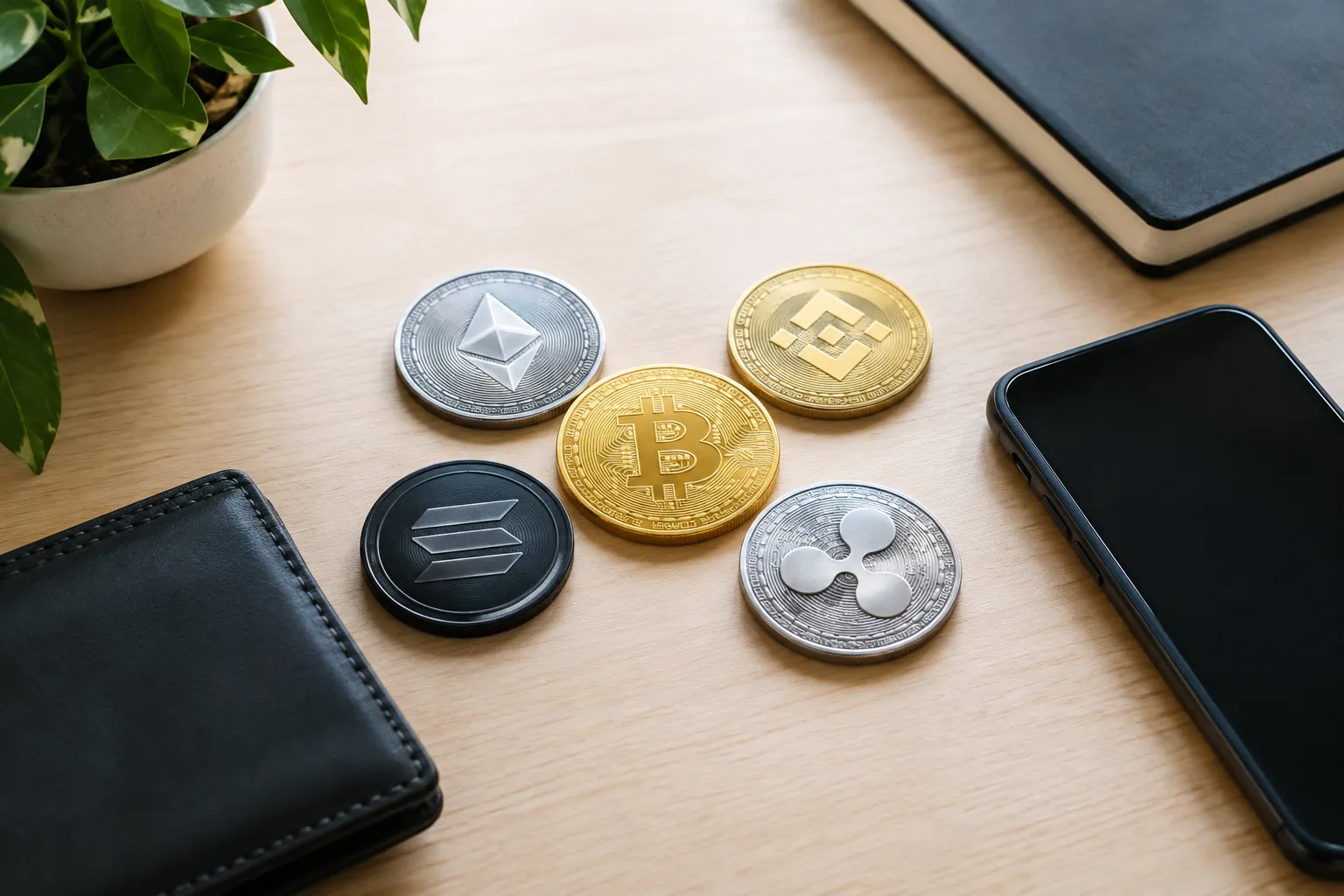
Crypto, short for cryptocurrency, usually refers to digital assets that use cryptography and operate through blockchain networks or similar systems. Cryptography is a way of securing information using mathematical techniques. The word is also used broadly for the technologies, services, and applications connected to these assets.
Bitcoin is a well-known cryptocurrency, but the category also includes assets associated with other networks and projects. Some are designed to transfer value; others may be used within an application or represent something different. Their purposes, designs, and risks vary.
Crypto is not the same as ordinary digital money in a banking app. A bank balance is a record maintained by a financial institution, while many crypto assets are recorded on a network shared among participants. That difference affects who maintains the records and how transfers are authorized.
If you are building a foundation, our crypto learning guides cover related beginner topics. Start by asking what an asset is for, what network it uses, and who controls the tools required to access it.
How blockchain networks record crypto activity

A blockchain is a digital record organized into linked groups of data, often called blocks. Copies of the record are maintained by computers participating in the network. When someone proposes a transaction, the network checks it according to its rules and, if accepted, adds it to the shared record.
The process is not identical on every blockchain. Some networks use mining, where participants called miners compete to add blocks under specified rules. Others use different systems in which validators help confirm transactions. These participants follow the network’s protocol; they do not necessarily know or approve each user personally.
For example, when one person sends crypto to another, the network checks whether the transaction is valid and updates its record of which addresses can access the relevant assets. An address is a public identifier used to receive assets. The recipient’s wallet uses private credentials to authorize later activity.
This process can make records visible on public blockchains, but visible does not always mean that an address reveals a person’s real-world identity. Learning how shared records and network rules work is a useful starting point; you can find more about our educational approach on the About Us page.
How coins and tokens differ
A coin is generally the native asset of its own blockchain. For example, Bitcoin is native to the Bitcoin network, and ether is native to Ethereum. A network may use its coin to pay transaction fees or as part of its operating rules.
A token is generally created on an existing blockchain rather than being the native asset of a separate network. Tokens can serve different purposes within applications, including representing access or other digital claims. Their functions and conditions depend on how they were designed and the application using them.
These terms are common conventions, not guarantees about an asset’s quality, usefulness, or risk. A token’s presence on a known network does not by itself establish that its project is trustworthy. For more context on the vocabulary, see our guide to crypto currency basics.
How crypto exchanges and wallets fit together
An exchange is a service that may let users buy, sell, or swap crypto. The available assets, account requirements, fees, and withdrawal options differ by platform. Before using one, check how it handles custody, what fees apply, and whether you can transfer assets to an external wallet.
A wallet is a tool for managing the credentials that authorize crypto transactions. It does not literally store coins like a physical purse; the assets are recorded on the blockchain. A wallet helps you interact with that record.
In a custodial arrangement, a service holds or manages the private keys on a user’s behalf. In self-custody, the user controls the private keys. A private key is a secret credential that can authorize transactions. Many self-custody wallets provide a seed phrase: a set of words that can help restore access. Anyone who gets that phrase may be able to control the associated assets, so it should not be shared or stored where others can access it.
Before sending crypto, confirm that the wallet and receiving address support the same network, then check the address carefully. Transfers to the wrong address or network may be difficult or impossible to recover. Some applications also request permissions, such as approval to use tokens; understand what you are authorizing and review or remove permissions you no longer need.
Why crypto values can change so sharply
Crypto prices can move sharply because values are affected by changing supply and demand, uncertainty about a project or network, news, and shifts in how people view risk. Markets for individual assets can also differ in activity and liquidity, meaning how easily an asset can be bought or sold without a large price change.
A quoted price is not a promise of what someone can later sell an asset for. Crypto assets may lose substantial value, and some may become difficult to trade or access. Other risks include scams, stolen credentials, software vulnerabilities, platform failures, and mistakes when sending transactions.
Learning how an asset works is separate from deciding whether to buy it. If you are weighing a financial decision, consult a qualified professional about your own circumstances; this guide is general education, not personalized financial or tax advice.
What to learn before exploring crypto
A cautious learning path can reduce confusion without requiring you to buy anything:
- Learn the basic terms: blockchain, coin, token, exchange, wallet, and transaction fee.
- Understand who controls access. With self-custody, protect the private key or seed phrase; with a custodial service, review its account and recovery procedures.
- Check the network and destination before any transfer. A familiar asset name does not guarantee that different networks are compatible.
- Treat unexpected messages, giveaway offers, and requests for a seed phrase as warning signs. Never reveal that phrase to someone claiming they need it to help.
- If you explore decentralized finance, or DeFi, remember that it refers to financial applications operating through blockchain-based systems. Learn what a connected app can access and what each transaction or token approval permits before confirming it.
- Decide whether crypto fits your needs and comfort with risk. There is no requirement to participate to learn about the technology.
Crypto FAQs
Is cryptocurrency the same as Bitcoin?
No. Bitcoin is one cryptocurrency, while crypto includes many other digital assets and the networks and applications associated with them.
Can crypto be used to pay for goods and services?
Yes, some businesses and services accept certain crypto assets, but acceptance varies. Check the seller’s payment instructions and network requirements before sending anything.
What is a stablecoin?
A stablecoin is a crypto token designed to maintain a steadier value, often by referencing an asset such as a currency. Its design and risks vary, and the intended value is not a guarantee.
How are new cryptocurrencies created?
A new crypto asset may be launched by creating a blockchain or by issuing a token on an existing network. Its rules depend on the project’s design and the underlying network.
What does crypto mining do?
Mining is a process some blockchains use to verify transactions and add blocks to the record. Miners use computing power to follow the network’s rules and compete to produce valid blocks.
Are crypto transactions reversible?
Usually, a confirmed blockchain transaction cannot simply be reversed by a bank or wallet provider. Some services may offer separate dispute or recovery processes, but these do not change the network record.
Do crypto transactions have fees?
Often, yes. Network fees may apply, and an exchange or other service may charge separate fees; amounts and fee rules vary by network and provider.
Do you have to pay taxes on crypto?
Tax treatment depends on the transaction and your circumstances. In the United States, crypto activity can have tax consequences, so consult current IRS guidance or a qualified tax professional for your case.
Learn the basics before taking your next step
Crypto brings together digital assets, shared records, and tools for managing access. The details vary from one network, asset, and service to another, so a clear understanding of those differences matters more than following hype.
You can keep learning at your own pace. Whether you are curious about Bitcoin, wallets, or DeFi, focus first on how a system works, what risks it carries, and what control you would have. Participation is a choice, not a prerequisite for understanding crypto.








[…] Software wallets stay connected to internet-enabled devices, which can make routine use straightforward but exposes access to device and online risks. To understand the underlying system before using one, read how crypto works. […]
[…] system’s agreement process determines whether it becomes part of the ledger. This is one part of how crypto works, though blockchain systems can also record information unrelated to […]
[…] These activities have different practical and financial risks. Reading about Bitcoin is not the same as buying it, and connecting a wallet to a DeFi app is not the same as simply holding an asset. For a foundational overview, start with crypto explained. […]