
Crypto blockchain technology connects digital assets to shared records and network rules. A blockchain is a ledger maintained across a network; cryptocurrency is a type of digital asset that can use that ledger to record transfers. The terms are related, but they are not interchangeable.
In brief:
- A blockchain records transactions according to rules set by its network.
- Network participants check transactions and agree on which records to add.
- Some blockchains also run smart contracts, which carry out programmed instructions.
- Digital assets can use different blockchains, so network compatibility matters when sending them.
How crypto and blockchain technology fit together
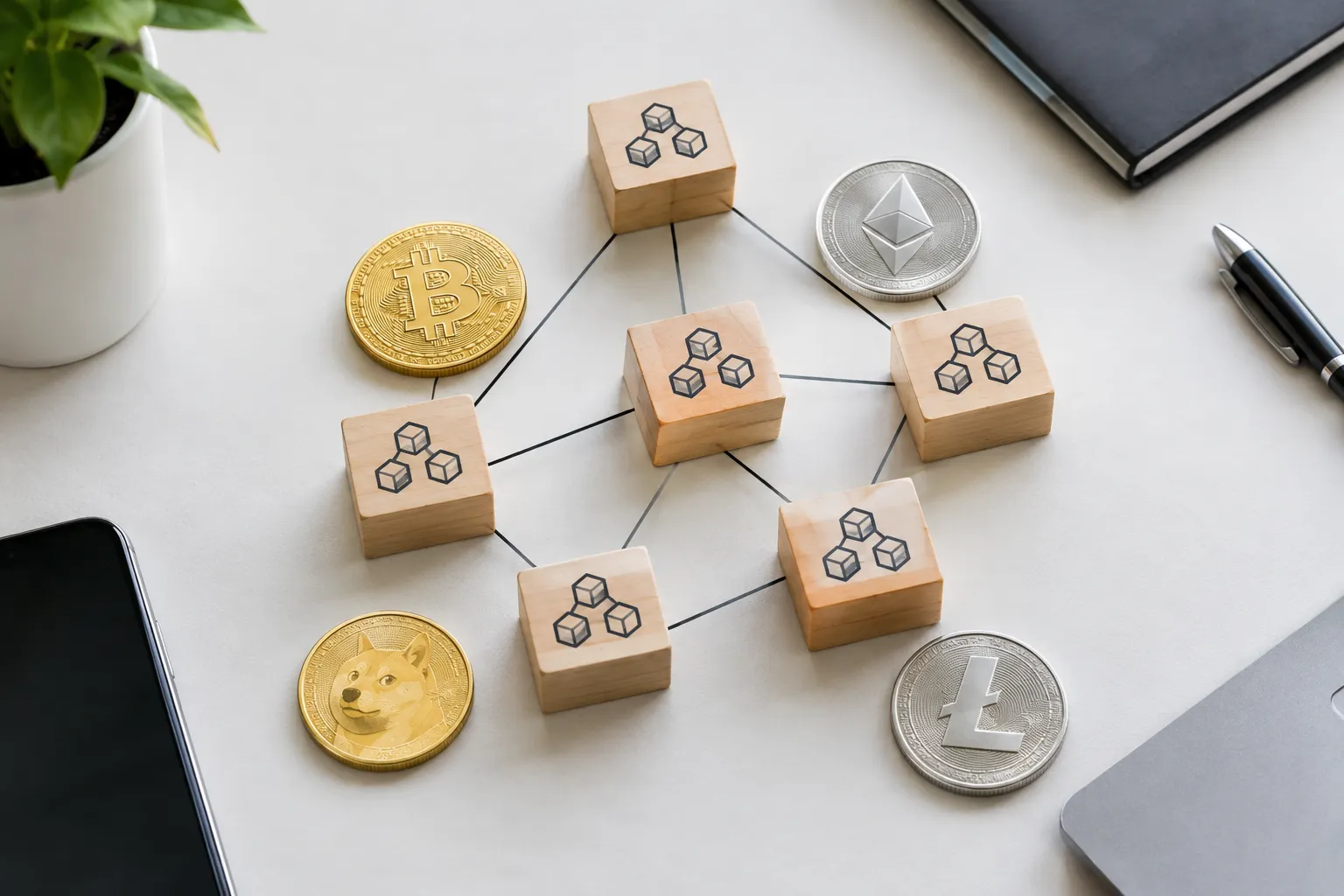
A blockchain is a shared digital record that is updated according to rules followed by a network. Cryptocurrency is a digital asset that can be transferred or tracked using such a record. The blockchain provides the system for recording activity; the cryptocurrency is one possible thing recorded on it.
Think of a blockchain as a ledger. It can record that a digital asset moved from one address to another, without listing the owner’s everyday name. Network rules determine which proposed transactions are valid and how new records are added.
Bitcoin, for example, has its own blockchain, which records Bitcoin transactions. Other crypto systems use other blockchains. Some digital assets are created on an existing blockchain rather than operating on a separate one.
This distinction is a useful starting point when learning about beginner blockchain guides. Understanding the network behind an asset can clarify what a transfer does, which rules apply, and why a wallet must support the relevant blockchain.
How a blockchain records and confirms crypto transactions
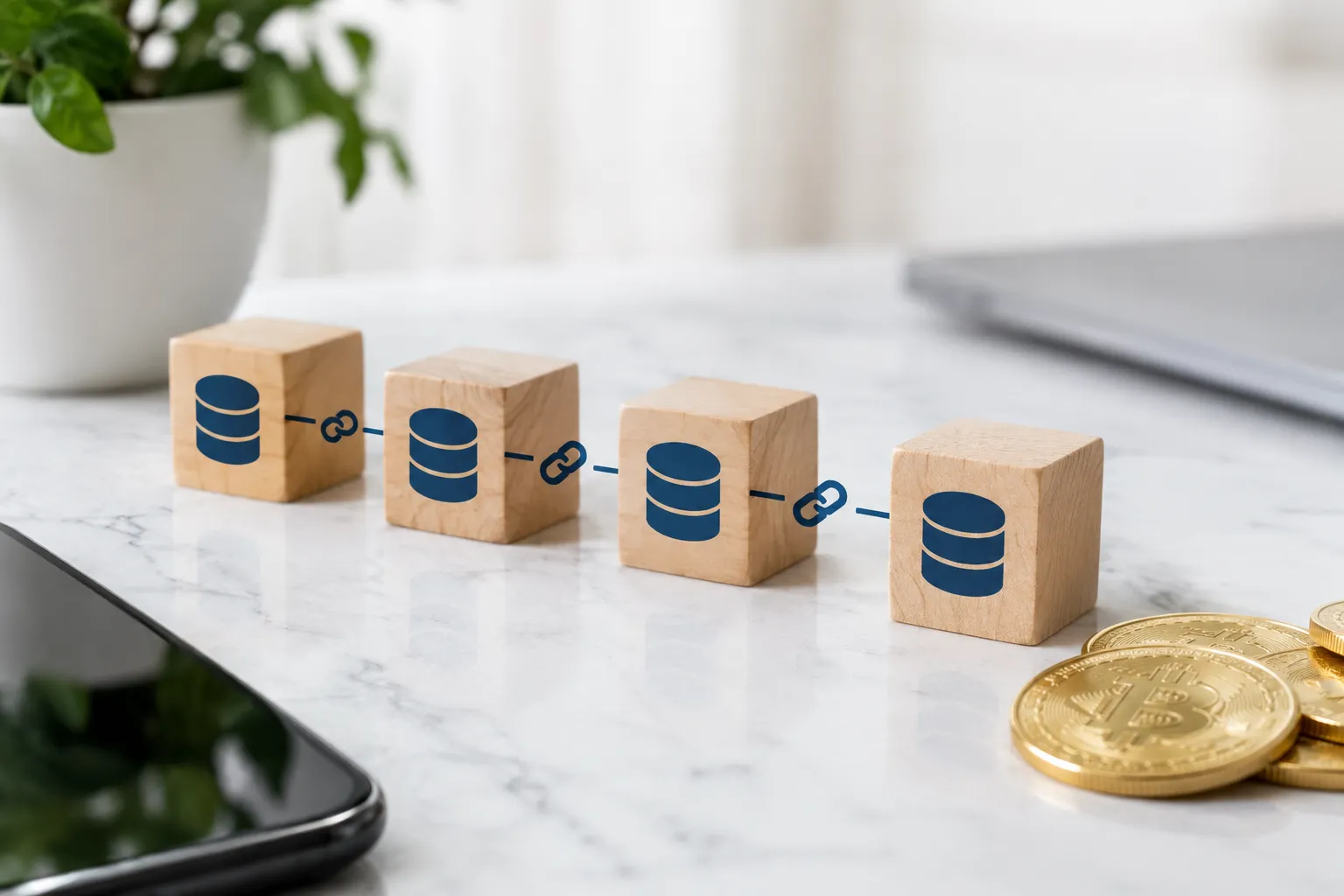
A crypto transaction is a request to update a blockchain record. The network checks that request under its own rules, then adds valid transactions to the ledger through its method of agreement, called consensus.
For more background on how the underlying system is structured, see our guide to blockchain technology basics.
From a signed transaction to a shared record
A wallet helps a user create and authorize a transaction. It does not usually hold coins in the way a physical wallet holds cash. Instead, it manages the keys used to prove control over assets recorded on a blockchain.
A typical transfer follows these steps:
- The sender enters a recipient address and an amount.
- The wallet prepares the transaction and signs it with the sender’s private key. A private key is secret information that authorizes activity for an address.
- The transaction is shared with the blockchain network.
- Network nodes—computers that follow the network’s rules—check whether the transaction is valid.
- The network’s consensus process determines when it becomes part of the shared record.
A valid transaction might need to show that the sender can authorize it and has the balance required under that blockchain’s rules. The exact checks and terminology differ among networks.
Before confirming a transfer, check the recipient address, asset, and network shown in your wallet or exchange. Addresses can be long and unfamiliar, so copying and checking the beginning and end can help catch mistakes; for higher-stakes transfers, a small test transfer may be worth considering if fees and platform rules make it practical.
How consensus keeps the ledger in sync
Consensus is the process a blockchain network uses to settle on valid records and keep participants’ copies of the ledger aligned. It helps participants who do not necessarily know or trust one another follow the same transaction history.
Blockchains do not all use the same consensus method. For example, proof of work and proof of stake are different approaches, with distinct rules for how participants help confirm or order records. A network’s own documentation explains its process and what its confirmation indicators mean.
A transaction shown as pending has not necessarily reached the same status as one included in a block or otherwise confirmed under that network’s rules. The number of confirmations considered sufficient can vary by network and by the service receiving the funds.
How smart contracts add rules to crypto transactions

A smart contract is software deployed on a blockchain that can run instructions when specified conditions are met. On networks that support them, smart contracts can automate actions such as transferring tokens or managing interactions with decentralized applications.
A decentralized application, or dApp, is an application that uses blockchain-based systems for some of its functions. A user might approve a token transfer to a smart contract as part of an interaction. The contract then executes according to its programmed rules and the network’s capabilities.
This does not mean every crypto transaction uses a smart contract. A simple transfer may only move an asset between addresses. Nor does the word “contract” necessarily mean a legal agreement: it describes software, and the software can have errors or limitations.
When learning how a blockchain is used in financial settings, it helps to separate the technology from the claims made about it. Our guide to what blockchain technology in finance can and cannot do explores that distinction.
Why digital assets can use different blockchains
A digital asset may operate on a blockchain built for that asset, or it may be issued using another blockchain’s infrastructure. This is one reason the same wallet or service may show assets associated with different networks.
Compatibility matters because an address and an asset are meaningful within particular network rules. A service may offer the same asset through more than one network, but that does not make those networks interchangeable. The sender and recipient must support the same network for the transfer to arrive as expected.
Before sending, check:
- The exact asset selected by both the sending and receiving services.
- The network selected on each side.
- Whether the receiving wallet or platform supports deposits on that network.
- Any additional instructions the receiving service requires, such as a memo or tag.
Do not assume that matching asset names or similar-looking addresses guarantee compatibility. If anything is unclear, pause and consult the receiving service’s instructions before confirming. For a transfer that could materially affect your finances, consult a qualified professional about your own situation.
What blockchain can do beyond cryptocurrency
Blockchain applications are not limited to recording cryptocurrency transfers. A shared ledger can be used to maintain records or apply common rules when multiple participants need to coordinate data. Whether blockchain is a suitable tool depends on the problem and how the system is designed.
Possible areas of use include tracking information across organizations, recording changes to digital credentials, or coordinating digital transactions under shared rules. These examples describe potential applications, not proof that a blockchain is automatically the best solution.
A blockchain may be less useful when one trusted organization can maintain a conventional database more simply, or when the information needs to remain private and easily corrected. A ledger can make records easier for network participants to consult, but it does not automatically guarantee that information entered at the start was accurate.
To evaluate a proposed application, ask:
- Who can add or change information?
- Who can read the records?
- What happens when information is wrong?
- What problem does the blockchain solve that another system would not?
These questions help distinguish a practical use from a claim based mainly on the technology’s name.
Crypto Blockchain Technology FAQs
Is blockchain technology a good career?
Blockchain technology can be a career area for people with relevant skills in software, security, product development, or other fields. Job fit depends on the role, required experience, and demand in the specific market.
What is blockchain technology beyond cryptocurrency?
Beyond cryptocurrency, blockchain technology can support shared records and programmed processes across participating organizations. Its usefulness depends on the application’s requirements, including who needs access and how records are corrected.
What technology will replace blockchain?
There is no single technology established as a replacement for blockchain across all uses. Conventional databases and other distributed systems may suit some needs better, while blockchain remains one option for particular network designs.
Explore crypto and blockchain one step at a time
To understand any digital asset, start by identifying its blockchain and the rules for transferring it. Then check which networks the wallet or service supports, how it displays transaction status, and what recipient details are required.
A seed phrase is a set of secret words that can restore access to a wallet. Anyone who obtains it may be able to control the assets associated with that wallet, so never share it with someone claiming to provide support. Learning the network basics before using an asset can make unfamiliar wallet screens and transaction steps easier to understand.