📊 Key Facts
- $100 is a legitimate starting point for cryptocurrency investment due to fractional ownership.
- Bitcoin fractional ownership allows $100 to buy approximately 0.00125 BTC at $80,000 price.
- Investing $100 teaches real exchange mechanics, emotional volatility response, and security discipline.
- Cryptocurrency is high-risk; investors could lose some or all of their investment.
- Guide covers choosing exchanges, managing risk, and building investment habits with $100.
Disclaimer: This article is for educational purposes only and does not constitute financial advice. Cryptocurrency is a high-risk asset class. You could lose some or all of your investment. Past performance does not guarantee future results. Always consult a licensed financial advisor before making investment decisions.
Here’s a truth most crypto articles skip: $100 is a completely legitimate starting point. Not because it’ll make you rich overnight—it won’t—but because it’s enough to learn real skills, build real habits, and get comfortable with an asset class that’s reshaping global finance.
This guide gives you a practical, honest framework for putting that $100 to work safely.
Is $100 Really Enough to Start Investing in Crypto?
Yes—and here’s why it matters more than you think.
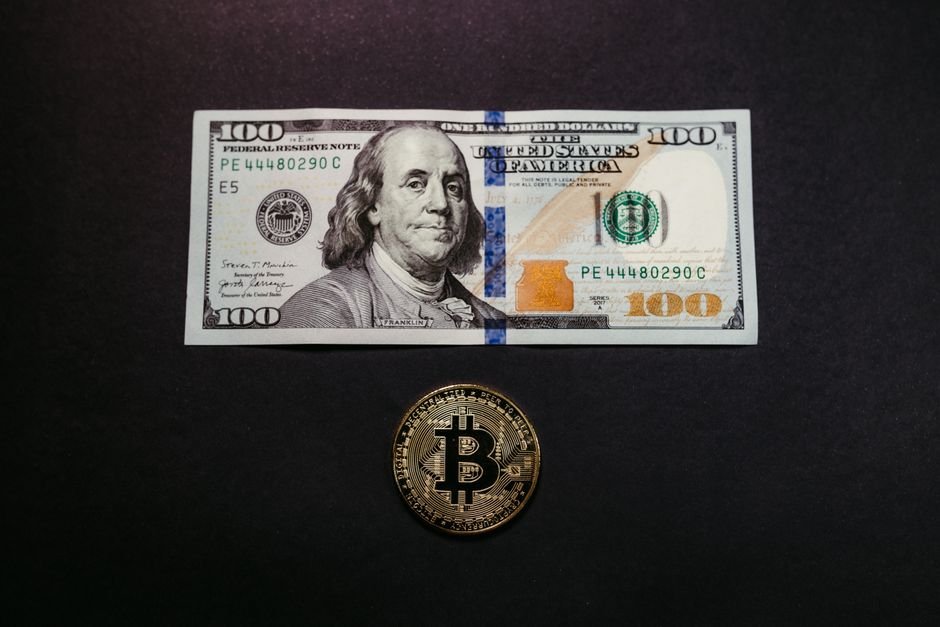
Cryptocurrency supports fractional ownership, meaning you don’t need to buy a whole Bitcoin or a whole Ethereum token. If Bitcoin is trading at $80,000, your $100 buys you roughly 0.00125 BTC. That fraction participates in every price movement, up or down, proportionally.
Beyond the math, $100 is valuable because it forces you to:
- Learn how exchanges work with real money (not simulations)
- Experience market volatility emotionally, not just intellectually
- Develop discipline around security and portfolio tracking
- Build habits that scale when you have more capital
The psychological lesson of watching a real $100 position move 20% in a week is worth more than any simulation. Just make sure it’s money you can afford to lose entirely—not rent money, not your emergency fund, not borrowed capital.
Choosing a Reputable Crypto Exchange
Your exchange is where you’ll buy, sell, and sometimes store your crypto. Picking the wrong one is one of the most common beginner mistakes.
Top Beginner-Friendly Exchanges (2026–2027)
| Exchange | Good For | Key Consideration |
|---|---|---|
| Coinbase | Absolute beginners | Simple UI; higher fees on basic plan |
| Kraken | Security-conscious beginners | Strong regulatory compliance globally |
| Gemini | U.S.-based beginners | SOC 2 certified; earn program available |
| Binance | Lower fees, more coins | Not available in all U.S. states; broader global access |
Important for global readers: Exchange availability varies by country. Binance, for example, operates in many countries but is restricted in certain U.S. states. Coinbase and Kraken have broader international availability. Always verify that your chosen exchange legally operates in your jurisdiction before signing up.
What to Look for in an Exchange
- Regulatory compliance — Is it registered with relevant authorities (FinCEN in the U.S., FCA in the UK, etc.)?
- Fee structure for small transactions — Some exchanges charge flat fees that eat heavily into small purchases (more on this below)
- Security features — Two-factor authentication (2FA), cold storage for customer funds
- User interface — Beginner-friendly dashboards matter when you’re learning
The Hidden Cost Problem: Fees on Small Transactions
This is a competitor gap nobody talks about enough: fees hit small investors hardest.
Here’s a realistic example:
- Coinbase’s basic plan charges approximately 1.49% per transaction
- On a $100 purchase, that’s ~$1.49 in fees immediately
- Some exchanges also charge spread fees (the gap between buy and sell price) of 0.5%–2%
Combined, you might start with $100 and effectively have $97–$98 in crypto immediately.
To minimize fee drag:
- Use an exchange’s advanced or pro trading interface (Coinbase Advanced, Kraken Pro) where maker/taker fees are significantly lower (often 0.1%–0.5%)
- Avoid debit card purchases where possible—bank transfers typically have lower fees
- Avoid making many small purchases that each incur minimum fees
What Should a Beginner Buy with $100?
The honest answer: keep it simple. Here’s a framework based on risk tolerance.
Option 1: Conservative (Lower Risk)
70% Bitcoin (BTC) / 30% Ethereum (ETH)
Bitcoin is the most established cryptocurrency with the longest track record and highest liquidity. Ethereum has strong utility as the backbone of decentralized applications. Together, they represent the two most widely held, most regulated, and most understood cryptocurrencies in the world.
This split gives you:
- $70 in BTC (~0.000875 BTC at $80,000)
- $30 in ETH (~0.012 ETH at $2,500)
Option 2: Moderate (Slightly More Diversified)
60% BTC / 30% ETH / 10% Stablecoins (USDC or DAI)
Holding a small stablecoin position keeps some dry powder available. Stablecoins like USDC (backed by Circle) or DAI (a decentralized stablecoin) maintain a 1:1 peg to the U.S. dollar. That 10% can be deployed during major dips—a simple but effective tactic.
Option 3: What to Avoid
- Meme coins and highly speculative altcoins — With only $100, a 90% loss on a speculative position is devastating and leaves you with almost nothing to learn from
- Leveraged trading — Absolutely off the table for beginners. Losses can exceed your initial deposit.
Want to explore how to structure your holdings further? Check out our guide on Crypto Portfolio Diversification for Beginners (2026–2027) for a deeper framework.
Step-by-Step: How to Buy Crypto with $100 for the First Time
- Choose your exchange based on your country and the criteria above
- Create your account — provide ID for KYC (Know Your Customer) verification; this is legally required on reputable exchanges
- Enable two-factor authentication (2FA) immediately — Use an authenticator app (Google Authenticator, Authy), not SMS if possible
- Link your payment method — Bank transfer is typically cheapest; card payments are faster but costlier
- Deposit your $100 — Wait for the transfer to clear if using a bank
- Make your first purchase — Use the pro/advanced interface to minimize fees
- Record your purchase price — You’ll need this for tax purposes later
Security Basics That Matter Even for Small Accounts
- Use a unique, strong password for your exchange account
- Never share your login credentials or seed phrases with anyone
- Enable withdrawal address whitelisting if your exchange offers it
- Consider moving crypto off the exchange into a personal wallet for amounts above ~$500
For wallet options, our guide on the Best Crypto Wallet for Beginners (2026–2027 Guide) breaks down hot wallets vs. cold wallets in plain language.
Realistic Return Expectations and the Growth Math
No article should promise you specific returns. But we can look at historical context—with the clear understanding that past performance does not predict future results and crypto has experienced multiple 70–80% drawdowns.
What the math does show is the power of consistency over time:
- If you invest $100 today and add $25/month using dollar-cost averaging (DCA)—buying a fixed amount on a regular schedule regardless of price—you smooth out volatility and gradually build a larger position
- DCA is widely regarded as one of the most sensible strategies for beginners because it removes the pressure of trying to time the market
When does it make sense to wait vs. invest $100 immediately?
Wait if:
- You don’t have a 3–6 month emergency fund yet
- You have high-interest debt (credit cards)
- You haven’t spent 30 minutes understanding what you’re buying
Invest if:
- Your financial basics are covered
- You genuinely want to learn by doing
- You accept that $100 could become $0
Tax Implications of Small Crypto Investments
This section gets skipped constantly—and it shouldn’t be.
In the United States, the IRS treats cryptocurrency as property. This means:
- Every time you sell, trade, or use crypto to buy something, it’s a taxable event
- Even small gains (or losses) must be reported
- If you hold for more than 12 months before selling, gains may qualify for lower long-term capital gains rates
- Losses can be used to offset other capital gains (tax-loss harvesting)
For global readers: Tax treatment varies significantly by country. The UK, Canada, Australia, and most EU nations have their own crypto capital gains frameworks. Always check your local tax authority’s guidance.
Practical step: From day one, keep a simple spreadsheet of every purchase: date, amount spent, coins received, and price per coin. This makes tax reporting dramatically easier.
Free tools like Koinly, CoinTracker, or CryptoTaxCalculator can automate much of this once your transaction history grows.
Common Beginner Mistakes (and How to Avoid Them)
1. FOMO-Driven Buying
Buying a coin because it’s up 300% this week is one of the fastest ways to lose money. By the time retail investors hear about a surge, early movers are often already selling.
2. Checking Prices Obsessively
Crypto trades 24/7. Watching hourly candles on a $100 portfolio will stress you out and tempt you to panic sell. Set a check-in schedule (weekly is plenty for beginners) and stick to it.
3. Storing Crypto on Sketchy Exchanges
If an exchange isn’t regulated and transparent about its financials, don’t use it. The collapse of several major exchanges in recent years is a reminder that “not your keys, not your coins” exists for a reason.
4. Ignoring Fees
As covered above, fees compound over time. Know what you’re paying before every transaction.
5. Treating Crypto as a Get-Rich-Quick Scheme
The investors who tend to do best treat crypto as a long-term position in an emerging technology, not a lottery ticket. That mindset shift matters more than which coin you pick.
Passive Income on Small Amounts: Is It Worth It?
Once you’re comfortable with the basics, staking is worth exploring. Some exchanges allow you to earn staking rewards on holdings like Ethereum directly on-platform, though rates and availability vary.
For a $100 position, staking rewards will be modest—but the habit of understanding yield mechanisms is valuable for when your portfolio grows. Our Staking Cryptocurrency for Beginners: 2026–2027 Guide explains how this works without the technical jargon.
When to Add More Capital
Consider adding to your crypto position when:
- You fully understand what you currently hold and why
- Your emergency fund is intact
- You’ve experienced at least one meaningful market correction without panic-selling
- You’ve reviewed and understood your tax obligations
Your first $100 is a tuition payment in the school of crypto investing. The lessons it teaches—about volatility, patience, security, and your own emotional responses—are worth far more than any short-term price movement.
Final Thoughts
$100 won’t retire you. But it will teach you how this asset class actually works, build habits that compound over time, and give you a foundation to scale from when you’re ready. Start simple (BTC + ETH), use a reputable exchange, minimize fees, secure your account properly, and keep records for taxes.
The goal of your first $100 isn’t to get rich—it’s to get educated.
Editorial note: This content is reviewed for accuracy against publicly available regulatory guidance and exchange documentation. It is updated periodically to reflect changes in the 2026–2027 crypto landscape.