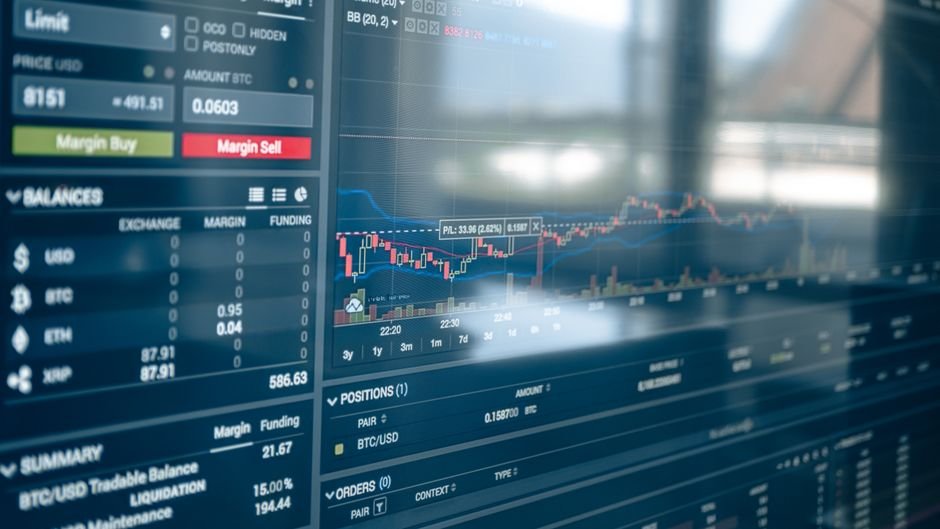
Cryptocurrency Leverage Trading Risks for Beginners: A No-Hype Guide to Liquidation, Losses & When to Avoid It (2026–2027)
📊 Key Facts
- Leverage trading can double money on 10% gains or wipe entire account in minutes.
- 10x leverage means $1 invested controls $10 of cryptocurrency position.
- Same 10% market move can result in complete loss of capital with leverage.
- Crypto markets can move 10% in one hour, triggering rapid liquidations.
- Leverage amplifies both gains and losses proportionally to multiplier used.
Important Disclosure: Leverage trading in cryptocurrency can result in the complete loss of your invested capital. Nothing in this article is financial or investment advice. Always do your own research and understand the regulations in your jurisdiction before trading.
Leverage trading sounds exciting on paper. You put in $100, control $1,000 worth of crypto, and if the market moves 10% in your favor — you just doubled your money. What’s not to love?
Here’s what the highlight reels don’t show you: that same 10% move in the wrong direction wipes your entire $100. And in crypto, 10% moves can happen in an hour.
This guide isn’t here to scare you off. It’s here to give you the honest, practical picture — including real numbers, real scenarios, and a clear framework for deciding whether leverage trading belongs anywhere near your portfolio right now.
What Is Leverage Trading, and How Does It Amplify Risk?
Leverage lets you borrow capital from an exchange to open a position larger than your actual balance. If you use 10x leverage, every $1 you put in controls $10 of crypto.
This works both ways:
| Leverage | Your Capital | Position Size | 10% Gain | 10% Loss |
|---|---|---|---|---|
| 1x (no leverage) | $500 | $500 | +$50 | -$50 |
| 5x | $500 | $2,500 | +$250 | -$250 |
| 10x | $500 | $5,000 | +$500 | -$500 (total wipeout) |
| 100x | $500 | $50,000 | +$5,000 | Liquidated at 1% move |
At 10x leverage, a 10% adverse price move eliminates your entire position. At 100x leverage, you only need a 1% move against you to lose everything. These aren’t edge cases — in crypto, 1% price swings happen constantly, even during calm markets.

Why Beginners Face Disproportionate Risk
Experienced traders lose money on leveraged trades too. But beginners lose faster and more completely for a few specific reasons:
- They underestimate volatility. Crypto is not the stock market. Bitcoin has historically swung 10–20% in a single day during volatile periods. Altcoins regularly swing 30–50%. These aren’t anomalies — they’re normal crypto behavior.
- They don’t understand their liquidation price. Many beginners open a leveraged position without knowing exactly what price triggers a total loss.
- They overtrade emotionally. A losing position feels urgent. Beginners often increase their position or add leverage to “recover” — a pattern that accelerates losses.
- They use too much of their portfolio. Putting 50% of your capital into a single leveraged trade isn’t bold; it’s one bad hour from a devastating loss.
Liquidation Explained Simply
Liquidation is what happens when your losses eat through your margin (your deposited collateral) and the exchange automatically closes your position to prevent further loss.
Here’s a real scenario:
You deposit $200 and open a 10x long position on Ethereum at $3,000. Your total position is worth $2,000.
- If ETH drops to roughly $2,700 (a 10% decline), your $200 collateral is gone.
- The exchange liquidates your position — your $200 is wiped out.
- You don’t owe more than your margin (on most platforms with isolated margin — more on this in a moment).
Your liquidation price is calculated by the exchange and displayed when you open the trade. Never open a leveraged trade without checking this number first.
What About Margin Calls?
Some platforms issue a margin call — a warning that your margin is running low — before liquidation. This gives you a chance to add more funds or close the position manually. However, in fast-moving crypto markets, the price can move past your liquidation point so quickly that a margin call arrives too late to act on.
Isolated Margin vs. Cross Margin: Which Is Safer for Beginners?
This is one of the most important decisions you’ll make when setting up a leveraged trade, and most beginner guides gloss over it.
Isolated Margin
Your risk is limited to the collateral you assign to that specific trade. If the trade is liquidated, you lose only what you put in — your other funds are safe.
Example: You allocate $100 to an isolated margin trade. If liquidated, you lose $100. Your remaining $900 in your account is untouched.
Cross Margin
The exchange uses your entire account balance as collateral across all open positions. This means a single bad trade can drain your whole account.
Example: You have $1,000 total. A cross-margin trade goes wrong. The exchange pulls from your full balance to try to keep the position open — and can liquidate you for far more than your initial stake.
For beginners, isolated margin is the safer default. It caps your maximum loss on any single trade. Cross margin is a tool for experienced traders managing complex multi-position strategies — it’s not a beginner-friendly setting.
Volatility Is Your Biggest Enemy as a Beginner
Crypto’s volatility isn’t just about big directional moves. It’s also about wicks — those sharp, short spikes in price that appear on candlestick charts. A single wick can touch your liquidation price and close your position, even if the broader market recovers seconds later.
This means even if you’re right about the long-term direction, a leveraged position can be liquidated by short-term noise before the market moves where you expected.
The lesson: higher leverage means your margin for error shrinks to almost nothing.
Common Leverage Ratios: What They Actually Mean for Beginners
- 2x: A 50% adverse move wipes your position. Manageable, but still risky in crypto.
- 5x: A 20% adverse move causes liquidation. Entirely possible in crypto within a single day.
- 10x: A 10% adverse move causes liquidation. This happens frequently in crypto.
- 100x: A 1% adverse move wipes your position. This is effectively speculation, not trading.
If you’re determined to explore leverage, most risk management frameworks suggest beginners start with 2x or 3x at most while learning mechanics. Even at these levels, the risks are real.
Position Sizing: The Most Important Skill You’re Not Learning
Most beginner guides talk about leverage ratios. Almost none explain position sizing — how much of your capital to actually risk on a single trade. This is the single most important factor in surviving long enough to learn from your mistakes.
A widely used guideline in professional trading: never risk more than 1–2% of your total portfolio on a single trade.
Here’s what that looks like:
- Portfolio: $1,000
- Max risk per trade (2%): $20
- If using 5x leverage, your position size is $100 — but your stop-loss is set so that the most you can lose on this trade is $20.
This approach means a string of losing trades doesn’t destroy your account. At 2% risk per trade, you’d need 50 consecutive losing trades to lose everything — which gives you room to learn, adjust, and improve.
Using 50% of your portfolio on a leveraged trade isn’t bold — it’s the fastest way to become a cautionary tale.
Risk Management Rules That Actually Work
1. Always Use Stop-Loss Orders
A stop-loss order automatically closes your position when the price reaches a level you define — before you hit liquidation. This is non-negotiable for leveraged trading. Set it before you open the trade, not after.
2. Know Your Liquidation Price Before You Enter
Every reputable exchange shows your liquidation price when you set up a leveraged trade. If you don’t know what this number is, don’t open the trade.
3. Limit Leverage Trading to a Small Portion of Your Portfolio
If you’re just starting out, consider keeping any leveraged exposure to 5–10% of your total crypto portfolio. The rest should be in lower-risk positions. If you haven’t explored building a solid base yet, check out our guide on Crypto Portfolio Diversification for Beginners (2026–2027) for a framework that works.
4. Never Add to a Losing Position
Doubling down on a leveraged trade that’s moving against you — sometimes called “averaging down” — is one of the most dangerous habits in trading. It amplifies your exposure precisely when the market is disagreeing with you.
Common Beginner Mistakes That Cause Total Account Wipeouts
- Opening max leverage because the exchange allows it. Just because 100x is available doesn’t mean it should ever be used by a beginner.
- No stop-loss, waiting for a recovery. Markets don’t owe you a recovery. Liquidation doesn’t wait.
- Using cross margin without understanding it. One bad trade drains the whole account.
- Trading during high-volatility events. News events, exchange listings, and macro announcements cause violent price swings that make leveraged positions almost impossible to manage.
- Revenge trading. After a loss, the urge to immediately get back in with a bigger position is powerful — and almost always makes things worse.
The Psychology of Leverage: Why Emotions Make It Worse
Leverage doesn’t just amplify profits and losses — it amplifies your emotional responses. Watching $200 evaporate in 10 minutes produces panic that watching $20 disappear simply doesn’t. That panic leads to impulsive decisions: closing winning trades too early, holding losing trades too long, or abandoning a strategy mid-trade.
Beginners are especially vulnerable here because they don’t yet have the experience to trust a plan when emotions are screaming to override it.
The solution isn’t to be emotionless — it’s to set your rules (position size, stop-loss, exit target) before you’re in the trade, when emotions aren’t driving the wheel.
Should You Trade Leverage? A Practical Decision Framework
Ask yourself these questions honestly:
- Have you been trading spot crypto for at least 6–12 months? If no — focus on understanding market cycles first.
- Do you understand liquidation and your exact liquidation price? If no — paper trade until you do.
- Do you have a written risk management plan? If no — don’t trade leverage yet.
- Are you in a stable financial position? Leverage trading with money you can’t afford to lose is dangerous for your finances and your decision-making.
- Is leverage trading available and legal in your jurisdiction? Regulations vary significantly by country. Some jurisdictions restrict or prohibit retail leverage trading in crypto. This is your responsibility to verify.
If you answered no to any of these, leverage trading is not appropriate for you right now. That’s not a permanent verdict — it’s a signal to build your foundation first.
Paper Trading: The Underrated Alternative
Before risking real capital, paper trading (simulated trading with fake money) lets you experience leverage mechanics without actual losses. Many exchanges and third-party platforms offer demo accounts.
Paper trading won’t replicate the emotional pressure of real money, but it will teach you:
- How liquidation works in practice
- How fast positions move with leverage
- Whether your strategy actually performs before you commit capital
Treat paper trading seriously — use the same position sizes and rules you’d use with real money.
Platform Selection and Safety Considerations
Not all exchanges are equal. For leveraged trading, consider:
- Reputation and longevity: Stick to well-established platforms with a track record.
- Insurance or protection funds: Some exchanges maintain funds to cover losses in abnormal market conditions.
- Fee structures: Funding rates on perpetual futures contracts can erode positions over time, especially if held for days.
- Liquidation mechanisms: Some platforms have more aggressive liquidation engines than others. Understand how the platform handles partial vs. full liquidation.
Also make sure your funds are secure off-exchange when not actively trading. Our Best Crypto Wallet for Beginners (2026–2027 Guide) walks through your options.
Leverage vs. Spot Trading: The Honest Comparison
In spot trading, you buy crypto with money you own. The worst case: the asset goes to zero, and you lose what you put in. Recovery is possible if the asset recovers.
In leveraged trading, you can lose 100% of your margin in a move that would only cost a spot trader 10%. And you can lose it in minutes.
For most beginners, spot trading is the more appropriate starting point. Build your understanding of market cycles, chart reading, and risk management before introducing leverage. If you’re interested in generating returns without leverage, Staking Cryptocurrency for Beginners: 2026–2027 Guide is worth exploring.
The Bottom Line
Leverage trading in crypto isn’t inherently evil — but it’s a tool that punishes beginners harshly and quickly. The risks aren’t theoretical: liquidation is fast, volatility is relentless, and emotional decision-making under financial pressure is nearly universal.
If you’re new to crypto:
- Build your spot trading experience first.
- Learn liquidation mechanics through paper trading.
- If you try leverage, use isolated margin, 2x–3x maximum, and strict position sizing.
- Never trade with money you can’t afford to lose entirely.
If you’re considering cryptocurrency trading as a business venture, understanding proper business registration and legal requirements is essential, especially if operating from Dubai—learn more about Dubai service business legal requirements.
Understanding the risks clearly — before you trade — is the most valuable edge any beginner can have.