
Cryptocurrency can be converted into U.S. dollars, but it does not automatically become cash. To access dollars, you generally sell the crypto through a service that supports withdrawals, then transfer or otherwise use the proceeds; the amount depends on the sale price and applicable fees.
Does crypto turn into real money: what it means in practice
Yes, crypto can be exchanged for dollars, but the conversion requires a transaction through a service or person willing to exchange it. The dollar value can change before a sale, and selling may have tax consequences.
Cryptocurrency is a digital asset recorded and transferred using a blockchain, a shared digital ledger maintained by a network of computers. It is not the same thing as a dollar in a bank account: owning crypto does not mean you already have an equivalent amount of spendable U.S. currency.
To turn crypto into dollars, you need a conversion method that supports the asset and a way to access the proceeds. Commonly, that means selling through a cryptocurrency exchange and then withdrawing the resulting balance, if withdrawals are available for your account and location. The service’s rules, supported assets, withdrawal options, and fees can vary.
For example, if you sell a quantity of cryptocurrency, the dollar amount you receive is based on the price at which the sale executes, less any applicable charges. A displayed price is not necessarily the price you will receive: the market may move, and the service may apply a fee or a different rate.
This distinction is central to the basics of cryptocurrency. A crypto balance is an asset held in a wallet or account; a dollar balance is the proceeds after a conversion. Learning cryptocurrency basics can help you understand how wallets and transfers fit into that process.
Does crypto turn into real money: the key factors
Whether crypto becomes usable dollars depends on the asset, the conversion service, the sale price, withdrawal options, and any fees or tax obligations. Check these factors before initiating a transaction.
The phrase “does crypto turn into real money” can make conversion sound automatic. It is not. A sale is a separate transaction, and the steps depend on where the crypto is held and which services support it. Understanding the mechanics makes it easier to spot costs, delays, and avoidable mistakes.
The core problem to understand
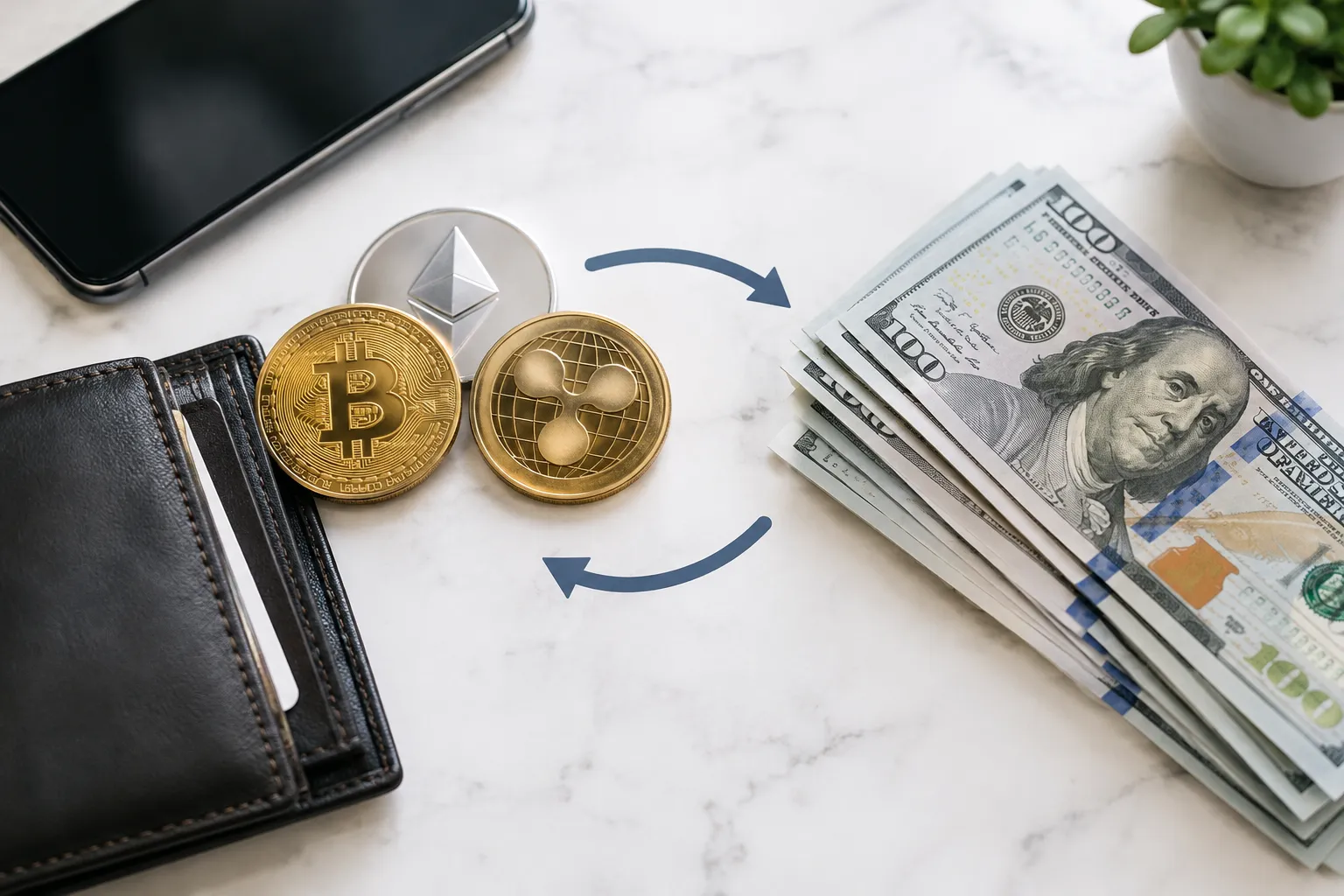
Crypto does not convert itself into dollars; a buyer or service must exchange it, and a separate withdrawal may be needed to access the proceeds.
A blockchain records transactions. Depending on the network, transactions are validated under that network’s rules and added to its ledger. A wallet helps a person manage the keys used to authorize transactions; it is not itself a container holding physical coins. The National Institute of Standards and Technology’s blockchain technology overview explains blockchain ledgers, consensus, and cryptography.
Three separate things are easy to confuse:
- Crypto ownership: You control or have a claim to a digital asset, either through a self-custody wallet or an account with a service.
- Selling: A transaction exchanges the crypto for dollars or another asset. The rate depends on the terms and timing of that transaction.
- Accessing proceeds: The resulting dollar balance may need to be withdrawn or transferred before you can use it outside the service.
Self-custody means you control the private keys that authorize transactions, rather than relying on a service to control them for you. A custodial account, by contrast, is managed by a service that holds or controls the keys. Each arrangement has different responsibilities: with self-custody, losing access to the keys can mean losing access to the assets; with a service, you depend on its account controls and withdrawal processes.
A wallet app can make it easier to manage crypto, but an app does not by itself guarantee a way to cash out. Before moving assets, check whether the destination service accepts the exact asset and network you are using. A wallet app for cryptocurrency can help you learn the role wallets play without treating a wallet balance as cash.
The practical decision criteria
Choose a conversion method by checking whether it supports your asset, explains its costs, offers a usable withdrawal route, and has security steps you understand.
Before selecting a service, compare these practical criteria:
| What to check | Why it matters |
|---|---|
| Supported cryptocurrency and network | A service may support one asset or network but not another. A mismatch can prevent a deposit from arriving as expected. |
| Sale method and displayed rate | The amount credited depends on the execution price and how the service calculates the exchange. |
| Fees and other costs | Charges can reduce the proceeds. Check the terms for both selling and withdrawing, where applicable. |
| Withdrawal options | Confirm how you can access the dollar proceeds and whether the available method works for you. |
| Account and identity requirements | Services may set eligibility, verification, and transaction requirements. Review them before sending crypto. |
| Security and recovery steps | Learn how the service secures accounts and how you can respond to a suspicious login or lost access. |
A service that supports selling does not necessarily offer every withdrawal method. Read the current terms in the service itself rather than assuming that a feature available to someone else will be available for your account. If the costs are unclear, pause before transferring crypto and look for the fee and withdrawal details.
The sale price also involves uncertainty. Crypto prices can change, and the amount shown before a sale may differ from the final proceeds. The Commodity Futures Trading Commission warns that virtual-currency activity carries risks including volatility, hacking, and phishing, and that customer protections may be limited. Treat a conversion decision as a transaction with possible loss, not as a guaranteed way to preserve a displayed value.
Common mistakes to avoid
The most avoidable cash-out problems come from sending crypto to an unsupported address or network, overlooking fees, and trusting messages that pressure you to act.
Before making a transfer or sale, watch for these errors:
- Sending before confirming compatibility: Check the receiving service’s instructions for the specific asset and network. Do not assume that similar-looking addresses or network names are interchangeable.
- Skipping a small detail in the address: Crypto transfers can be difficult or impossible to reverse after confirmation. Verify the address and any required transfer information before approving the transaction.
- Ignoring costs: Compare the expected sale proceeds with the stated fees and withdrawal charges. A quote that leaves out a charge can give a misleading picture of what you will receive.
- Confusing a wallet balance with cash: A balance shown in dollars may be an estimate of the crypto’s value, not dollars available to withdraw.
- Responding to urgent requests: A stranger who asks you to pay a fee, share a recovery phrase, or transfer assets to “unlock” proceeds may be attempting a scam. The Federal Trade Commission’s cryptocurrency scam guidance covers common warning signs and explains why crypto transactions may be hard to reverse.
- Sharing a seed phrase: A seed phrase is a set of words used to restore access to a self-custody wallet. Anyone who obtains it may be able to control the wallet, so do not enter it in a message or share it with someone claiming to provide support.
Never rely on a link or phone number in an unexpected message to resolve a wallet or withdrawal problem. Instead, use contact and support options reached through the service’s official app or website. If you are unsure about a transaction, stop and verify the address, network, and instructions before authorizing it.
Does crypto turn into real money in practice: how to apply it
To convert crypto into dollars, choose a service that supports your asset, sell through its stated process, and withdraw or otherwise access the resulting balance. Confirm costs and tax implications before proceeding.
A careful process separates the decision to sell from the decision to transfer. The following steps help you understand what you are authorizing:
- Identify where the crypto is held. Check whether it is in a service account or a self-custody wallet, and confirm which asset and network are involved.
- Compare eligible conversion services. Review supported assets, account requirements, sale terms, withdrawal methods, and fees. Do not send crypto until you have confirmed that the receiving service supports the exact asset and network.
- Review the transaction details. Check the recipient address, network, amount, sale terms, and any fee shown. If the details do not match your intended transaction, do not approve it.
- Sell only after checking the terms. The sale price and proceeds depend on the transaction’s execution and applicable charges. A price displayed earlier is not a promise of the final amount.
- Access the dollar proceeds. Follow the service’s withdrawal or transfer process and confirm where the funds will arrive. Keep a record of the transaction, including relevant dates, amounts, and fees.
- Review U.S. tax reporting. The IRS treats digital assets as property for U.S. federal tax purposes, and certain digital-asset transactions may need to be reported. Read the IRS digital assets guidance and consult a qualified tax professional about your own situation.
If you are still learning what cryptocurrency is and how it works, start by understanding the difference between a wallet, an exchange account, a blockchain transaction, and a dollar withdrawal. Those terms describe different parts of the process; knowing which one you are using can help you catch a mismatch before you send funds.
Do not treat a conversion service’s estimate as a guaranteed amount, and do not assume that a successful sale means the dollars are already in a bank account. Check the service’s status and instructions for each stage. This is especially useful if a transfer is pending or an account asks for additional verification.
FAQ
Crypto can be exchanged for dollars, but the sale price, fees, and access to proceeds vary by transaction and service. These answers address what conversion does—and does not—mean.
Do you actually make money from crypto?
You can receive dollars by selling cryptocurrency, but that does not necessarily mean you made a profit. Whether you gained or lost value depends on your costs, sale proceeds, fees, and applicable tax treatment.
Can you lose money with crypto?
Yes. Crypto can lose value, and a sale may return less than you paid; scams, security failures, and transfer mistakes can also lead to losses.
Recommended next steps
Start by identifying where your crypto is held and what service can convert that specific asset into dollars; then verify the costs, withdrawal route, and tax records before acting.
- Identify the cryptocurrency, network, and wallet or account where it is held.
- Compare services that support that exact asset and network, including their sale terms, fees, account rules, and withdrawal options.
- Verify the recipient details and transaction information before approving any transfer.
- Review the expected sale proceeds and applicable fees, and decide whether the terms are clear enough to proceed.
- Keep transaction records and check the IRS digital-asset guidance; consult a qualified tax professional for advice about your own circumstances.