Blockchain technology explained simply: it is a way to keep a digital record shared across multiple computers, with updates grouped into blocks and linked in sequence. The method can make past entries difficult to change without detection, but blockchains differ in who can participate, who controls them, and how updates are approved.
What blockchain technology means
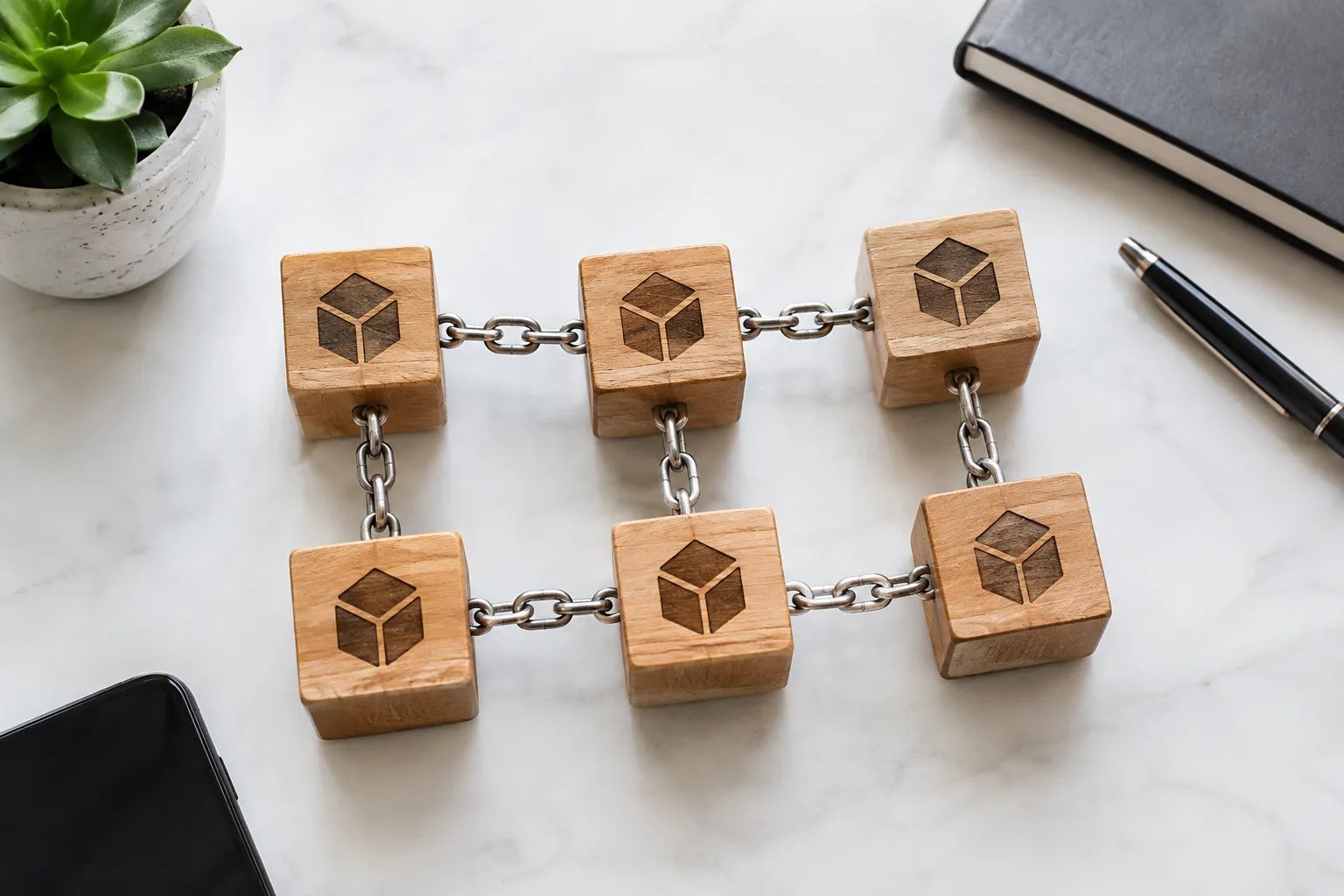
A blockchain is a type of digital ledger: a record of transactions or other data. Instead of storing the record in one place under one organization’s control, a blockchain can distribute copies across a network. New entries are grouped into blocks, and each block is linked to the one before it using cryptography.
That link helps the network detect changes to earlier records. If someone alters a block, its link to later blocks no longer matches the expected sequence. Depending on the network, changing the record may also require overcoming the agreement process used by its participants.
In plain terms, blockchain technology combines a shared record, a method for checking updates, and rules for adding those updates. It is not a guarantee that information is true, that a network is fully decentralized, or that using a blockchain is risk-free.
If you are starting from the basics, our beginner blockchain guides explain related ideas without assuming you already know the terminology.
How a blockchain records and verifies updates

The process varies by network, but a typical update follows a sequence like this:
- Someone proposes an update. In a cryptocurrency network, that might be a request to send digital currency from one address to another.
- The network checks it against its rules. Participants or software may verify details such as whether the sender is authorized and whether the transaction follows the network’s format.
- The update is grouped with other accepted updates into a block.
- The network uses its agreed process to approve the block.
- The approved block is added to the chain, and network participants update their copies of the record.
The method used to approve updates is called a consensus mechanism. Different blockchains use different mechanisms and rules, so this step does not work the same way everywhere. A transaction may also take time to reach the network’s accepted level of confirmation.
A blockchain record can make unauthorized edits easier to detect, but it does not automatically verify every real-world claim entered into it. If a system records that a shipment was delivered, for example, the blockchain may preserve that entry; it cannot by itself prove that the delivery actually occurred.
For a complementary introduction to these fundamentals, see our guide to blockchain technology explained. The network-specific details matter, so check how a particular blockchain handles validation, confirmation, and corrections.
Blockchain compared with a conventional database
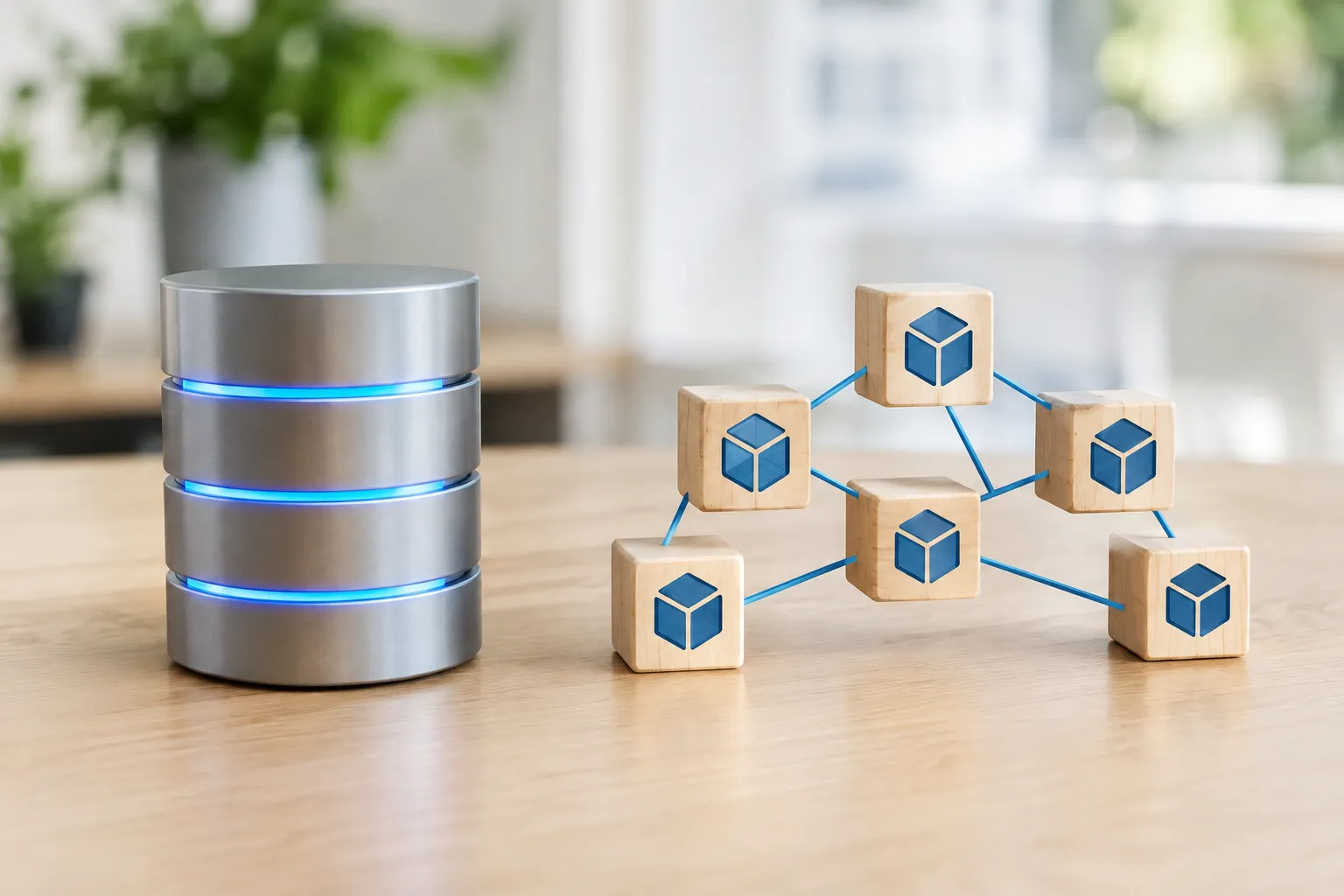
Both blockchains and conventional databases store information. The key difference is often how updates are controlled and how participants share the record.
| Feature | Blockchain | Conventional database |
|---|---|---|
| Who manages updates | One or more network participants follow shared rules | An organization or administrator typically controls access and changes |
| How records are shared | Copies may be maintained by multiple network participants | Data is generally managed by the database operator, though it may be backed up or shared |
| How changes are handled | New entries are commonly added in sequence; altering past entries may be detectable or restricted | Authorized users can often edit or delete records according to the system’s permissions |
| Typical fit | A shared record may help when multiple parties need to check updates under common rules | A centrally managed system may be more suitable when one organization needs direct control |
This is a general comparison, not a rule for every system. Some databases are distributed across multiple servers, and some blockchains restrict who can read, write, or validate records. A blockchain is not automatically better than a database: the appropriate design depends on the problem and the level of shared control needed.
To see how blockchain fits into cryptocurrency, explore crypto blockchain technology. The recordkeeping system is one part of how crypto networks work; the connection between the record, the network, and its rules is important.
A simple example of shared recordkeeping
Imagine a group of three community organizations tracking shared equipment. Each organization has a copy of a digital log. When equipment moves from one location to another, a participant submits an update stating which item moved, when it moved, and where it went.
The group follows agreed rules to check the update. If it is accepted, it is added to the shared record, and the organizations update their copies. Each can review the same sequence of recorded movements rather than relying on one organization to maintain the only log.
This example illustrates the idea, not a recommendation to use a blockchain for equipment tracking. A shared database could also serve the purpose. A blockchain may be relevant when participants want a common record and do not want one party to have sole control over its history. The design still depends on who can submit updates and how the group decides whether they are valid.
How access and control vary across blockchains
Some blockchains are public, meaning people can generally view records and participate according to the network’s rules. Others restrict access. For example, an organization or consortium may limit who can read the ledger, submit transactions, or approve updates.
These terms are related but not identical:
- Open access means people can participate or view information without needing permission, subject to the network’s rules.
- Permissioned access means an administrator or group controls who can take certain actions.
- Decentralization describes how control and decision-making are distributed. It is a matter of degree, not a simple label that guarantees no central influence.
A public blockchain is not necessarily controlled equally by all users. A restricted blockchain may still have multiple participants sharing responsibility. To understand a specific network, check who operates its infrastructure, who can approve changes, what information is visible, and how its rules can be changed.
Explore blockchain with the right expectations
Blockchain technology can provide a shared record that is difficult to alter unnoticed, but its usefulness depends on the situation. It does not ensure that input data is accurate, remove the need for governance, or prevent every security problem. The network’s design and the applications built on it matter.
Before using a blockchain-based service, take these steps:
- Identify the specific network and application. A wallet, exchange, and blockchain are different parts of the process.
- Check who can access and update the record, and how the network approves changes.
- Understand what information is public and whether actions can be reversed.
- Learn the application’s risks before connecting a wallet or approving a transaction.
If you are considering a transaction or other financial decision, consult a qualified professional about your own circumstances.
Recommended next steps
Start by learning the vocabulary: a block groups updates, a ledger records them, and a consensus mechanism describes how a network agrees to add new blocks. Then look at one specific blockchain and check its access rules, validation process, and limitations.
Understanding those details is more useful than treating every blockchain as the same technology. A clear grasp of how a particular network works can help you evaluate blockchain-based tools without relying on hype.