
Blockchain is often discussed alongside Bitcoin and other digital currencies, but the technology has uses that do not depend on a tradable coin. If you are asking what blockchain technology can do beyond cryptocurrency, the key is to separate the shared record system from any digital asset recorded on it. That distinction helps you judge whether a blockchain, an asset, both, or neither fits a particular need.
Blockchain networks and crypto assets at a glance
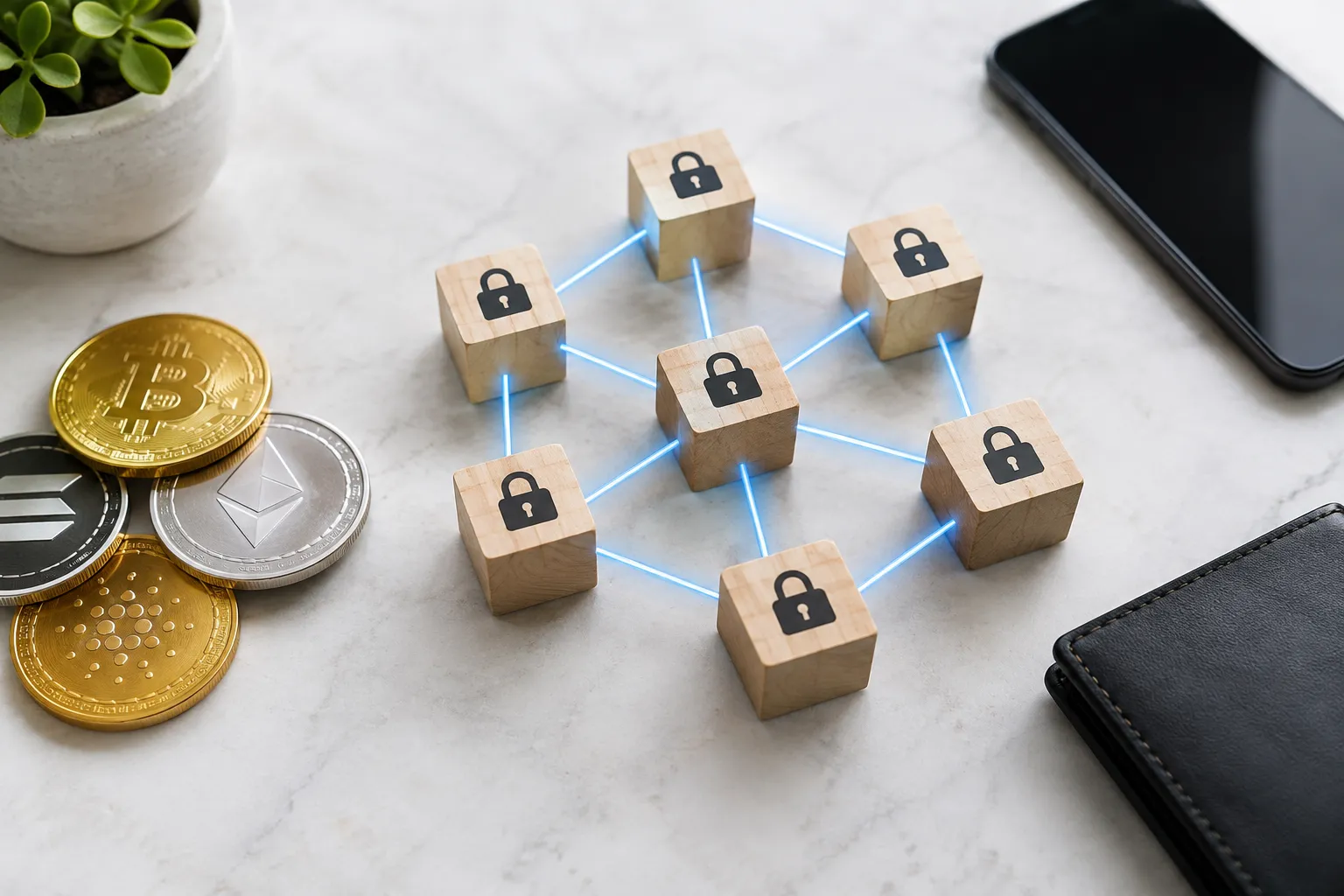
A blockchain is a shared digital record that multiple computers maintain according to agreed rules. A crypto asset is a digital unit that can be recorded or transferred using a blockchain. They can work together, but they are not the same thing.
| Criterion | Blockchain network | Crypto asset |
|---|---|---|
| What it is | A system for maintaining and updating a shared record | A digital unit recorded or managed by a system |
| What it does | Coordinates records and applies network rules | May represent value, access, a right, or another function |
| Can it be traded? | The network itself is not an asset to trade | Some assets can be transferred or traded; others may have limited uses |
| How they relate | Can operate with or without a tradable asset | May rely on a blockchain to record ownership and transfers |
This is the core difference between blockchain technology and cryptocurrency: one is infrastructure, while the other is a possible use of that infrastructure. A blockchain may support a currency, but currency is not the only reason to use a blockchain.
For an overview of related beginner topics, explore our crypto learning guides.
What blockchain technology beyond cryptocurrency can do

A blockchain can help multiple participants maintain a shared record when they need to coordinate but do not want one participant to control the record alone. Its entries are linked and checked under network rules, making unauthorized changes easier to detect. This is sometimes described as a tamper-evident record: changes may be difficult to make unnoticed, though no record system is automatically immune to errors or misuse.
Consider a supply chain. A producer, shipper, and retailer might record handoffs as goods move between them. A shared ledger could make it easier for participants to compare records of those events. But the blockchain does not independently prove that a shipment contains what a participant says it contains. The information still has to be entered accurately and checked against the real-world item.
Other possible applications include:
- Managing credentials, such as recording that a credential was issued or later revoked.
- Coordinating records across organizations that need a consistent view of events.
- Running software rules that respond to information recorded on a network.
These uses differ from cryptocurrency transfers, but they face a similar design question: who is allowed to submit, view, and validate records? A blockchain is not automatically the best choice. If a trusted organization can manage a conventional database that meets everyone’s needs, a shared blockchain may add complexity without solving a meaningful problem.
To understand the digital-currency side of the comparison, see our guide to cryptocurrency basics.
Where blockchain networks and digital assets overlap

Bitcoin is both the name of a blockchain network and the name commonly used for its native digital currency, but the terms refer to different things. The network maintains and updates its transaction history; bitcoin is the asset transferred and recorded through that network.
Ethereum makes the distinction easier to see. Its network records activity involving its native asset, ether, as well as tokens created using its software standards. A token is a digital unit defined through software on a network. It may have a particular use or represent something according to its design, but its presence on a blockchain does not by itself guarantee usefulness, value, or legal rights.
In practice, ask two separate questions:
- What does the network do, and who can use or update it?
- What does the asset represent, and what rules apply to holding or transferring it?
Keeping those questions separate can prevent confusion when reading about blockchain technology and cryptocurrency. For a fuller foundation on the network itself, read blockchain what is it.
When a blockchain can work without a tradable coin
Not every blockchain needs a publicly traded cryptocurrency. Some networks are permissioned: participation is limited to approved organizations or users, and access may be controlled by the network’s administrators. In these systems, the participants may use the shared record without needing a coin that anyone can buy and sell.
A token can serve different purposes depending on the network. It might be used to pay for network activity, help coordinate participation, or represent a digital unit. In other designs, access and record updates are handled through organizational rules rather than a tradable token. These arrangements vary, so the word “blockchain” alone does not tell you how a particular network is governed or funded.
A useful distinction is between a token’s function and its marketability. A network may use a token as part of its operation without that token being intended for broad public trading. Conversely, a token can be traded without providing a clear reason that a blockchain is needed. Look at the network’s documentation to understand its access rules, governance, and any token’s stated role.
Decide whether a blockchain or digital asset fits the need

Start with the problem, not the technology label. The right choice depends on who needs to share information, whether participants trust one another, and whether they need a digital unit in addition to a record system.
- A shared record system may fit when several independent participants need to coordinate updates and want a common history governed by agreed rules.
- A digital asset may fit when users need a transferable digital unit or another function the asset is designed to provide. Its use and risks depend on its specific design.
- Both may be relevant when a network records transfers of an asset and the participants also need the shared system that processes those transfers.
- Neither may be necessary when one trusted organization can securely manage the records with a simpler database, or when no digital asset serves a real purpose.
Before relying on a blockchain for real-world information, ask who enters the data, who checks it, who can correct errors, and what happens if the system or a participant fails. If you are considering an asset or making a financial decision connected to one, consult a qualified professional about your own situation.
Explore the right blockchain concept for your next step
If you are learning, first get comfortable with the difference between a network, a record, and an asset. Then look at one example and trace what the network records, who validates updates, and whether a token is involved.
If you are assessing a specific blockchain, check its public documentation for participation rules, governance, and how records are confirmed. If a digital asset is part of the system, verify what the asset is intended to do and what risks accompany its use. A familiar name or a blockchain label is not a substitute for understanding those details.
Recommended next steps
To decide whether blockchain technology beyond cryptocurrency is relevant to a project or learning goal, identify the record that needs to be shared and the participants who need access. Then determine whether the problem calls for a blockchain, a digital asset, both, or a simpler alternative.
For a beginner, the most useful next step is to follow one network’s records and learn what each participant, rule, and asset does. Understanding those separate roles makes it easier to evaluate new blockchain claims without assuming every application needs a coin.